
Overview
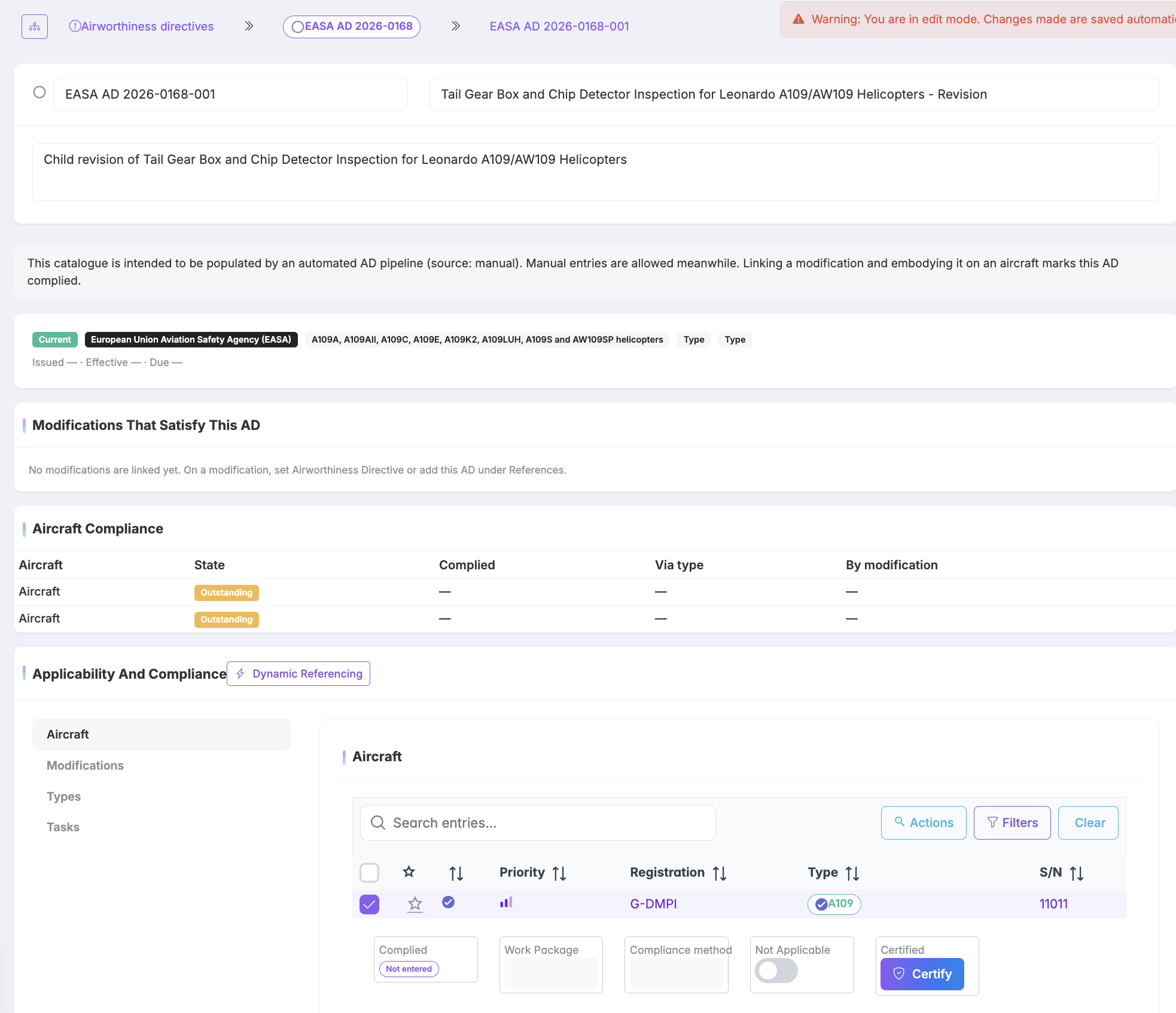
Airworthiness directives belong in the continuing airworthiness record — not a side spreadsheet. The AirOS Airworthiness Directives domain is the CAMO catalogue of ADs: draft, current, superseded, and cancelled statuses; type-level applicability that adds outstanding fleet aircraft of that type; and per-aircraft complied, certified, or not-applicable stamps.
Link a modification to an AD. When that modification is embodied and certified on an aircraft, AirOS stamps those linked ADs as complied on that aircraft — with the modification as the method. Embodiment does not mark unrelated ADs complete, and it does not close recurring AMP tasks or due items that are not those linked ADs. Partial work (uncertified embodiment) does not stamp compliance.
Service bulletins are tracked through modifications and engineering orders; the ARC AD/SB qualifying check reads this AD catalogue plus linked embodiment status. AI Create reads uploaded AD documents, matches catalogue types and named registrations, presents suggested links for review, and lets you discard failed drafts. An empty catalogue is never treated as proof that no ADs apply.
Features
- AD catalogue: In-force, superseded, and cancelled airworthiness directives as first-class CAMO records
- Type & aircraft applicability: Adding a type toggles outstanding aircraft of that type onto the AD; specific registrations can be linked from the document
- Modification embodiment: Certified embodiment of a modification that is linked to an AD stamps that AD complied on the aircraft. Unrelated ADs and uncertified work are left outstanding
- Not applicable stamps: Mark an AD N/A on an aircraft when it does not apply — with the same audit discipline as compliance
- AI Create from the AD PDF: Extract product type, registrations, and named modifications; review suggested links and discard failed drafts before save
- ARC AD/SB checks: Outstanding applicable ADs block ARC readiness and surface as suggested findings until complied or marked not applicable. The check assists the reviewer; it does not issue the ARC