In audits, investigations, and day-to-day coordination, aviation teams are judged on coherence: whether the schedule, technical records, commercial commitments, and risk controls tell the same story. When those artefacts live in different tools, the organisation pays twice—once in duplicated effort, and again in the time it takes to reconstruct what actually happened.
AirOS is built around a simple premise that matches how aviation really works: operational reality is not a single “module,” it is a network of interdependent decisions. Aircraft availability, crew duty, maintenance intent, compliance tasks, charter sales, and flight-data-informed insight all pull on the same finite resources. The platform therefore treats configuration, permissions, and data capture as first-class concerns, so each team can work in its own domain without losing the thread that ties the operation together.
From lists to a system of record
Spreadsheets and ad-hoc trackers are excellent for prototyping. They are fragile as systems of record because they rarely enforce structure, versioning, and access control at the level aviation demands. A domain-driven model—where each operational area has a defined schema, lifecycle, and ownership—makes it far harder for “unofficial” truth to creep in alongside the record you would be comfortable defending.
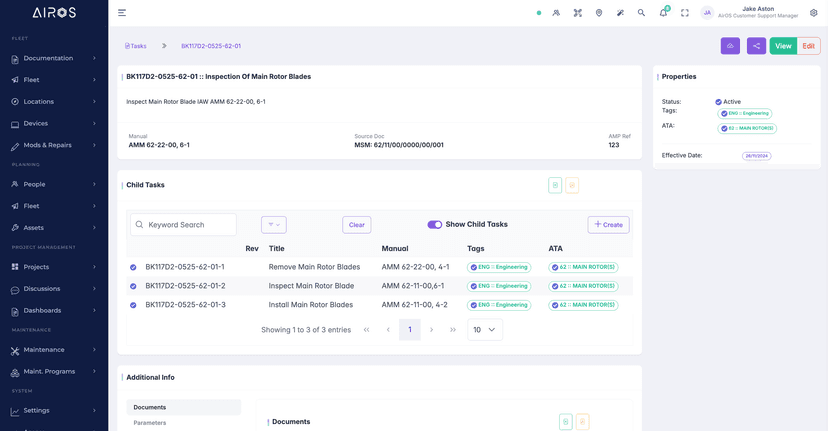
In AirOS, records are organised as entries within configurable domains (for example aircraft, maintenance, compliance, scheduling, and inventory). That structure is not cosmetic: it is what allows consistent reporting, controlled fields, and predictable workflows as the operation scales from a handful of aircraft to a multi-base fleet.
Live operational awareness, not nightly reconciliation
Many enterprise tools still behave like batch systems: export on Friday, reconcile on Monday. Commercial aviation rarely affords that latency. When dispatch, maintenance control, and commercial staff work from stale snapshots, small gaps become large risks—double-booked capacity, tasks completed but not reflected in release documentation, or customer-facing promises that drift from technical reality.
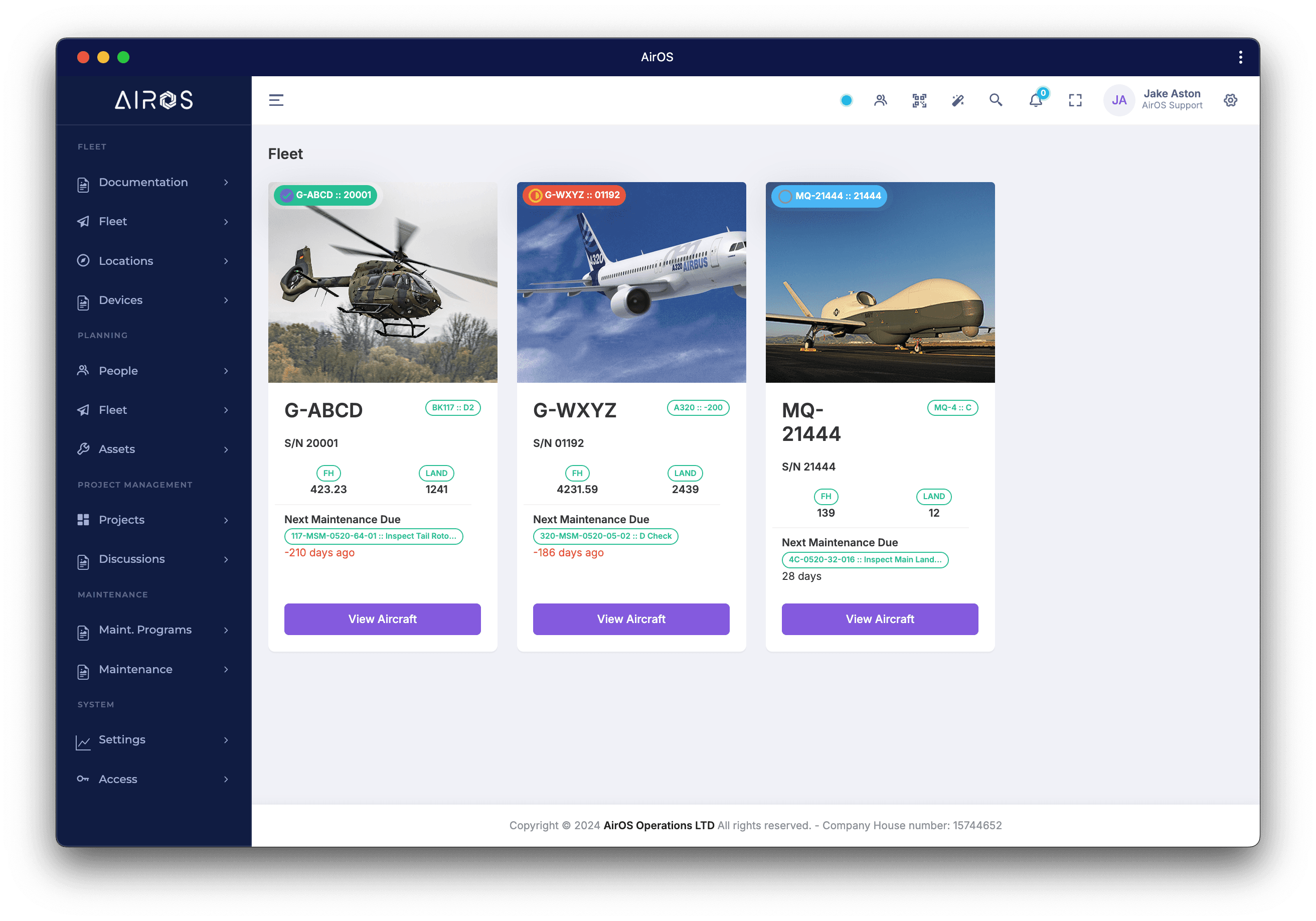
AirOS is designed for continuous alignment: updates propagate in real time so the organisation is not waiting for the next file version to know whether an aircraft is serviceable, whether a slot is still valid, or whether a workflow has moved to the next accountable role. The goal is not “more notifications,” it is fewer silent mismatches between teams who each believe they are looking at current truth.
Where AirOS shows up across the operation
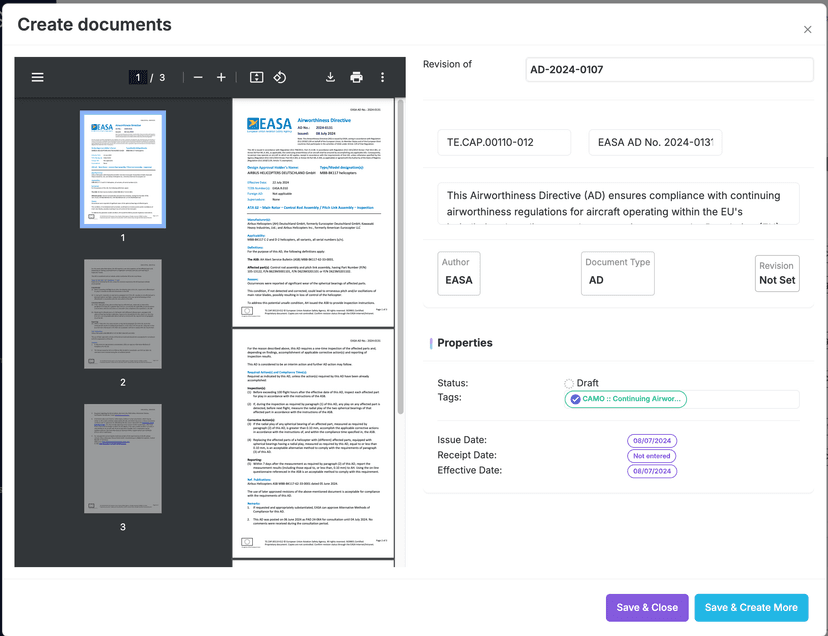
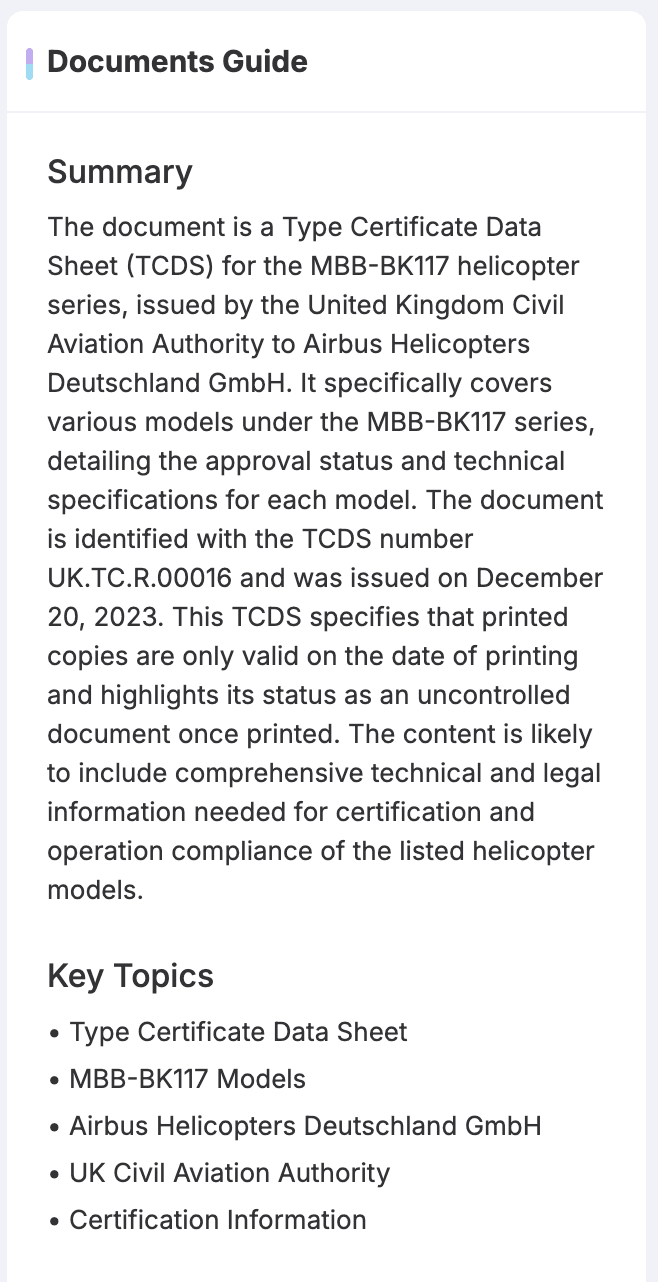
The product surface area is intentionally broad because the problems are coupled. Scheduling and capacity planning connect to what can realistically be flown and maintained. Maintenance information and technical records anchor airworthiness decisions. Compliance and safety workflows translate policy into accountable actions with traceability. Charter operators can pair operational rigour with commercial velocity through integrated booking experiences, while flight data monitoring and hardware integrations provide an evidence trail that supports both performance analysis and post-event reconstruction.
None of this replaces professional judgement. It reduces the tax of stitching judgement together from incompatible fragments—so engineers, pilots, planners, and commercial leads spend less time chasing context and more time applying it.
What to look for when you evaluate “integration”
- Multi-tenant isolation and role-based access that mirror how authority is delegated in your organisation.
- Configurable domains that reflect your approved processes—not a forced template that breaks the moment you introduce a new aircraft type or operating location.
- A coherent audit narrative: who changed what, when, and under which authority.
- Operational modules that interoperate by design (schedule, maintenance, compliance, commercial, and flight data monitoring) rather than through brittle manual bridges.
If you are comparing platforms, ask vendors to demonstrate a single cross-team scenario end to end—release to service after a defect, a charter quote constrained by maintenance due dates, or a compliance review tied to lived flight activity. The quality of the answer matters more than the length of the feature list.
If you would like to walk through AirOS against your own operating model, contact us for a focused demo. We will map your domains, permissions, and critical workflows so you can judge whether the backbone supports the way your organisation flies, maintains, and sells—not the other way around.